Tuesday, 10 June 2014

The Gambia


Away 2007; Saller


Gambia football shirt


OK, at this point I have probably exhausted my “wow, I got this a great price” posts, but as I have been sticking to a fairly limited budget, I get some pleasure out of these bargains.  I happened upon this by chance, a few minutes before a listing ended on German Ebay.  Stuck a bid in, expecting the usual late flood of bids to drive the price up by tens of euro.  But it never came.  So for the less than €20 (incl delivery), I had this very rare shirt secured. This particular shirt was worn by the men's team at the 2007 u20 World Cup in Canada.
 
They say what is rare is beautiful, but it is hard to say this Scorpions shirt is particularly beautiful.  It is a standard template from Saller of its time (this particular template seems to have been wore by quite a number of smaller countries around this time), and only the logo and crest add any flashes of colour.  Sometimes I like plain shirts, but this should be tied to simple cuts and fit.  Here, the shirt is quite baggy (even allowing for its XL size) with a lot of panels and piping. The crest is a heavy felt print, rather than embroidered.  This looks and feels better than the thinner, plasticy print that many kits at the lower end of the game get when embroidery isn’t used.

The Gambia, which takes its name from the river than runs through the country, has been on the international football stage for around 50 years now. Initially an FA was formed in the then ‘British Gambia’ and played a number of matches. With the Gambia gaining independence in 1965, the ‘British’ was dropped.  In 1966, the Gambia FA was formally affiliated with FIFA and CAF.  In their early years, actually playing matches was a rare occurrence.  Despite affiliation in ’66, it wasn’t until 1968 that the national team played again, losing away to Sierra Leone.  There was no quick way to get that loss out of their systems, as it was another 3 years before the team would play.  Again, it was away to Sierra Leone, and again the visitors lost. In 1982, the FA entered a team in World Cup qualifying for the first time.  The Gambians have withdrawn form World Cup and ACN qualifying on a number of occasions, perhaps showing the struggles of being the smallest nation on continental Africa, About a third of the population lives below the international poverty line of US$1.25 a day.

Currently, the FA is serving a ban (until 2017) from all CAF competitions for falsifying the ages of players in qualifying for the continent’s u20 championships. 

Indeed, it is at underage level that the Gambians have seen their only  real success.  The u17 boys have won two CAF championships (2005, 2009) and appeared at two World Cups as a result.  The u17 female team have also been at a World Cup, 2012 in Azerbaijan. As mentioned at the start, the u20 men also qualified for the u20 World Cup in 2007.


Gambia football shirt

Gambia football shirt

Gambia football shirt

Gambia football shirt

Gambia football shirt


Saturday, 26 October 2013

Ukraine


Home 2004-06; Lotto


Officially, Ukraine football came into being in 1991 following the collapse of the USSR and the independence of the Ukrainian state.  The formation of a national football association can be seen as two-fold.  Initially, an Association was created in March of that year, but this was still heavily linked to the Football Federation of the Soviet Union (FFSU).  The following December, the Association followed in the national lead, and declared itself independent from the FFSU.  Thus, a truly independent governing body was formed in the country.  In early 1992, they were accepted into both UEFA and FIFA in 1992.

However, Ukraine national teams did exist prior to this.  The Ukrainian Soviet Socialist Republic, to give it its full title, played matches against other Soviet republics within the USSR, as well as games against touring sides.  Notably, they reached the final of a Soviet Championship in 1928, beating Belarus and Transcaucasia before losing to Moscow in said final. Aside from these games, Ukrainian players represented the USSR until its collapse.  Even after the independence of Ukraine, some players who had already been playing for the USSR continued to play for the new ‘Commonwealth of Independent States (CIS)’ national team and then ‘Russia’, which was sanctioned as the official successors to the USSR.  Of these, perhaps Andrei Kanchelskis is most famous.  Despite being of Ukrainian origin, he chose to play with CIS and then Russia.  Conversely, Yuriy Nikiforov played for all three.  In 1992, he lined out four times for CIS, before playing a further three games for Ukraine in the same year. Despite this, he went on to play for Russia in 1993 and represented them until his retirement. 

With official recognition of Russia as the successor to USSR, came the controversial decision to award all UEFA coefficient points to them, despite the massive role played by Ukrainian players (7 of the 11 who started the final of Euro ’88 were Ukrainian).  Essentially, this meant that the new Ukraine began from scratch for their national teams and league. 

This stumbling block was overcome, most notably by a Dynamo Kiev team which stared in European competition in the mid-90s, fired on by players such as Andrei Shevchenko and Serhiy Rebrov. On the international stage, the wait was a little longer.  It was not until 2006 that the team first qualified for a major tournament, the World Cup.  Indeed, this is the tournament that this short was worn.  In this way, I am glad to have a little piece of history (similar to the last ever Yugoslav shirt here).   And when they finally did make their appearance, it wasn’t just to make up the numbers.  Wins over  Tunisia and Saudi Arabia made up for a hammering at the hands of Spain, and saw them through to the last 16, where they beat Switzerland on penalties.  In the quarter-finals, they lost 3-0 to Italy, but could take some consolation in seeing the Italians go all the way and win the tournament.

It would be 2012, before Ukraine reached another tournament, and this time qualification wasn’t needed as they co-hosted the European Championships with neighbours, Poland.  Sadly, they failed to make it out of their group on home soil.  Arguably, the lasting impression of Ukraine from this competition was lightning storm which lit up their game against France, and caused the referee to suspend the game for some time.  At the time of writing this post, these two teams are set to play each other once more, this time in a play-off for qualification to the World Cup in Brazil next year.

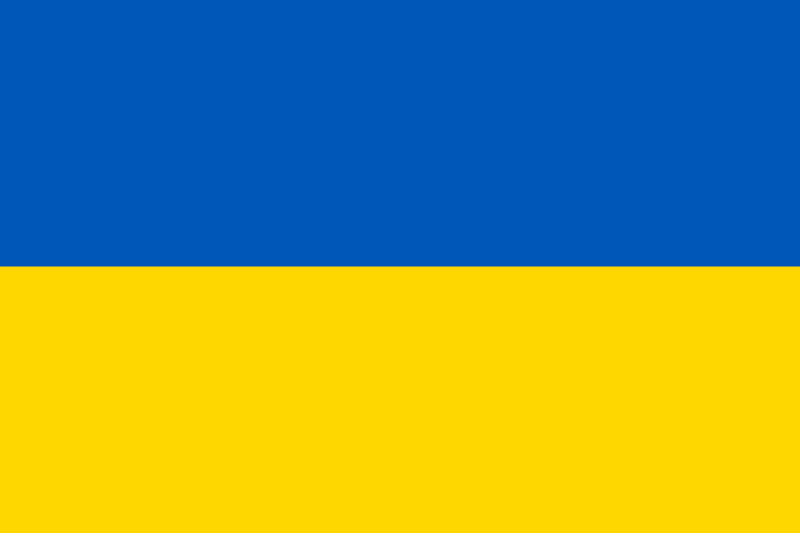
Let’s go back to 2006 though, and talk about this shirt.  It is one I had always admired so was delighted to pick it up a while ago. It is a very nice shade of yellow, and the blue flashes have always reminded me of a bumble-bee (if you see it too, let me know).  In pictures, I thought the material would be very shiny, but in the flesh it actually has quite a matte finish.  Two things let it down slightly though. First, the crest is sewn on, rather than heat-pressed or embroidered.  This is the case with many Lotto shirts around this time, and is a shame as it makes it look a little cheap.  This template was given a lot of air-time by Lotto, so no surprise than they just sewed on the required crests.  The crest itself is actually a great one, if a little odd looking.  It features the national symbol, the tryzub, which has baffled historians over what it actually is (see Wikipedia article here), sitting atop a football.

The other draw-back, in my opinion, is the red logos on the sleeve.  I know red is Lotto’s primary colour for their logo, but it would have looked much better in blue, if it had to be there at all. The neckline features the Ukrainian flag, but could be mistaken for a random blue bar given that the rest of the colour is also yellow.  The fit is excellent.


Saturday, 5 October 2013

Barbados


 Away (unknown year); Locust.

Barbados football shirt


99p is all this cost. It will be hard to top that in terms of bargains in this search for shirts.  Add in the rarity of them, and it becomes an even bigger result. I couldn’t believe my luck when I saw it going that cheap as the hours and minutes ticked down on Ebay so took a shot and won.   Now the one thing about this shirt over other Locust ones which have sold for much more is that a picture of the team wearing it has so far been impossible to source.  My fellow collector, Joe, has the home version of this and has also been unable to find a picture.  I have discussed the shirts with him and we’re both happy that they are genuine Locust products, and are genuine Barbados FA approved also.   Locust even lists it on their website as the official Barbados shirt and they were on sale in stores there.  It is not unheard of to not be able to unearth pictures of some of the rarer shirts. In this case, there aren’t many pictures of the team playing, never mind the shirt itself in action. 

Anyway, moving on, this is a real gem of a shirt.  The colours are vibrant and the quality of the shirt is excellent.  No sublimation or screen printing, all embroidered logos and the eye-for-detail on the stitching is good.  These are the things that the smaller companies often get wrong, but not Locust to be fair to them.  While I had never heard of them until recently, they have actually carved out something of a niche for themselves in Caribbean football, making some of the other international shirts in the area.

The Bajan Pride, as the team is nicknamed, have very little to cheer about on the international stage.  They have never reached a major tournament and shock results are really their high point.  Wikipedia lists wins over Costa Rica (2-1) and a 1-1 draw with Northern Ireland as notable results, but they are almost ten years ago now.  Since then, wins against any nation have been hard to come by.  One-goal wins over Aruba and Dominica respectively being the highlight of their last ten or so games.  That said, with a population of just over 200,000 people, it would be unfair to call them underachievers either.  There are just 15,000 registered players there across all grades and including both sexes.   FIFA currently ranks them above Liechtenstein, but for me that just proves the absurdity of the ranking system. 

While the two results mentioned above are famous in their own right in Barbados, one Bajan result from 1994 has since become infamous across the globe in international football.  It took place at the Caribbean Cup, where the first round featured a number of 3-team groups, out of which the top placed team progressed.  Unlike most league formats, draws weren’t deemed to be an acceptable finish, so any games ending tied would go to extra time.  But that is where the real silliness began.  The extra-time was Golden Goal, but for some bizarre reason, the winning goal would count double in the group’s “goals for” standings.  Going into their final game against Grenada, who were top on three points and a goal better off in the Goal Difference, Barbados found themselves bottom with no points.  Puerto Rica were also on 3 points having beaten Grenada, but were out of contention no matter what the result was. To advance, Barbados would need to win by two clear goals. 

Barbados set about their task, and indeed went two goals ahead, enough to see them through.  But then Grenada scored and suddenly it was them who were back top of the group.  The Bajan Pride went on the attack once more but couldn’t break down the Grenada defence.  Then, in a moment of underhanded genius, Barbados deliberately scored an own goal to get themselves into extra time where they could attempt to score the double goal.
Now the game was at 2–2, with just three minutes of normal time left. The Grenadian players caught on to Barbados's plan, and realized that they would advance in the tournament by scoring a goal in either net. This left the match in the highly unusual position of no clear side of the field for one team versus the other, but rather one team trying to score a goal in either net, and the other team trying to defend both. For the next three minutes, Barbadian players successfully defended both sides. Still tied at 2−2, the game went on to extra-time, where the winning "Golden Goal" would count double — so Barbados only had to score once to qualify for the 1994 Caribbean Cup. Thorne scored the winner for Barbados and they advanced to the next round
Watch the famous own goal here and subsequent winning goal here - http://www.youtube.com/watch?v=ThpYsN-4p7w


 Barbados football shirt


 Barbados football shirt
 Barbados football shirt

Barbados football shirt

Barbados football shirt

Barbados football shirt

Barbados football shirt